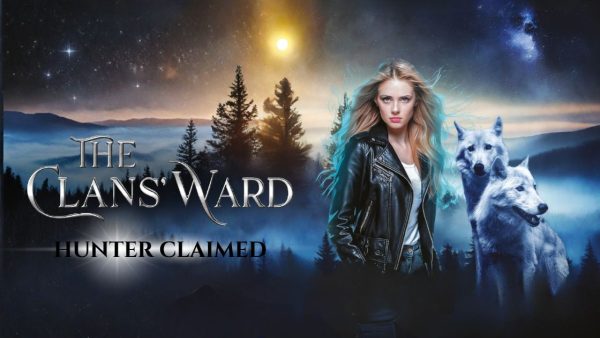
When I started writing The Clans’ Ward, I knew I wanted to tell a story about supernatural creatures fighting for independence. That idea shaped the political backdrop of the series and drove many of the conflicts in the first two books. But by the time I reached Hunter Claimed, my attention had shifted toward a different question:
What happens after you find where you belong?
Because belonging turns out to be far more complicated than simply finding your people.
In the first books, Ellie struggles to understand the supernatural world and her place within it. She is surrounded by wolves, shamans, vampires, demons, and creatures pulled from folklore, yet she remains stubbornly human. Her greatest challenge is survival.
In Hunter Claimed, survival is no longer enough. Now she must decide what kind of future she wants to help build.
One of my biggest inspirations for this installment was diplomacy. Fantasy novels often focus on battles, dark lords, magical artifacts, and world-ending threats. Those elements are certainly fun, but I’ve always been fascinated by what happens when enemies are forced to sit at the same table instead of meeting on a battlefield.
A negotiation can be just as dangerous as a fight.
A careless word can cause as much damage as a sword.
The Solstice gathering allowed me to bring together many of the supernatural groups that have been operating in the background since the beginning of the series. Faoladh, vampires, shamans, Fae, demons, mages, witches, and dragons all arrive with their own ambitions, loyalties, grudges, and secrets. What interested me wasn’t just who would win.
It was what they were willing to sacrifice to achieve their goals.
Folklore remains at the heart of the story. As with the previous books, I continued drawing from Quebec legends while expanding the wider mythology of the Wendigo Universe. Figures such as La Corriveau, Bonhomme Sept Heures, and Memphré exist alongside creatures and legends borrowed from other cultures. I love treating folklore as something living rather than static, something that evolves alongside the people who tell the stories.
But perhaps the strongest theme that emerged while writing this book was responsibility. Power is inherited throughout Hunter Claimed. Political power. Magical power. Social power.
Some characters desperately want it. Others fear it. And a few discover that power arrives whether they asked for it or not.
The supernatural world is changing. Old systems are beginning to crack. New alliances are forming. Independence that once seemed impossible is suddenly within reach.
The question becomes: what do you do when the future you’ve been fighting for finally arrives?
Ellie’s journey reflects that uncertainty. She begins the series as an observer standing at the edge of events. By the end of Hunter Claimed, she can no longer remain on the sidelines. The monsters, politicians, queens, dragons, and legends around her all expect something from her. And for the first time, she starts to realize that her voice may matter just as much as theirs.
Ultimately, Hunter Claimed is a story about community. Not the comforting version we often imagine, but the complicated reality of it. Communities argue. They make mistakes. They carry old wounds. They disagree about the future. Yet they still have to find a way to move forward together.
For me, that’s where folklore becomes most interesting. Legends endure because they help us understand who we are, who we fear, and who we hope to become. And sometimes the hardest monsters to confront aren’t the ones lurking in the forest. They’re the divisions that keep people apart.
Hunter Claimed asks what happens when those divisions finally start to break.

