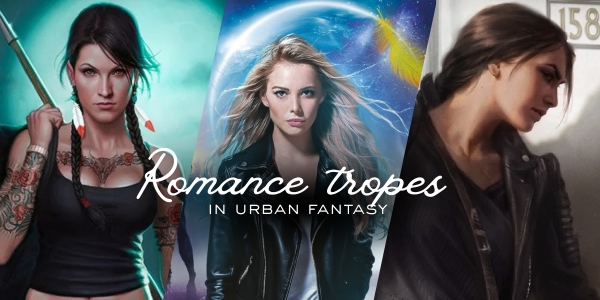
One of the defining features of urban fantasy isn’t just magic or monsters—it’s the relationships that evolve within dangerous, high-stakes worlds. Romance in this genre rarely follows a straight line. Instead, it thrives on tension, power dynamics, and emotional growth.
From slow burn fantasy couples to the clash between dominance and independence, urban fantasy romance tropes create relationships that feel earned, not instant.
Let’s explore the most compelling tropes—and why they work so well.
The Slow Burn: When Love Takes Time
Among all urban fantasy romance tropes, slow burn remains one of the most beloved. In worlds filled with danger, trust isn’t given lightly—and that makes every step toward intimacy meaningful.
Kate Daniels & Curran (Kate Daniels – Ilona Andrews)
Kate and Curran begin as adversaries, locked in a dynamic driven by power, territory, and mistrust. Their relationship evolves gradually, shaped by battles, negotiations, and mutual respect.
This slow progression allows:
- Emotional trust to develop alongside physical attraction
- Conflicts to transform into understanding
- Equality to emerge organically
Their relationship works because it is never rushed. Every shift in their dynamic feels earned.
Mercy Thompson & Adam (Mercy Thompson – Patricia Briggs)
Mercy and Adam also embody the slow burn dynamic, but with a different tension: independence versus pack structure.
Mercy resists being absorbed into the hierarchy of the werewolf pack, while Adam must learn to respect her autonomy. Their connection develops through shared trials rather than instant attraction alone.
Their slow burn highlights:
- The importance of boundaries
- Trust built through action, not words
- Growth on both sides
Ellie & Karl (The Clans’ Ward – Mel Dufresne)
Ellie and Karl take the slow burn trope even further. Their connection exists from the start—but emotional acceptance does not.
Ellie resists the bond between them because it threatens her independence. Karl, aware of his own dangerous nature, refuses to force that connection.
Their slow burn is defined by:
- Mutual restraint
- Emotional conflict rather than external opposition
- A deep tension between desire and self-preservation
This creates a relationship where every moment of closeness carries weight. Their bond isn’t inevitable—it’s chosen, again and again.
The Alpha Hero and the Independent Heroine
Another core pillar of urban fantasy romance tropes is the pairing of a powerful, often dominant figure with a fiercely independent heroine.
This dynamic works because it creates immediate tension: control versus freedom, protection versus autonomy
Kate & Curran
Curran begins as the classic alpha: territorial, authoritative, and accustomed to obedience. Kate refuses to fit that mold.
Their relationship evolves as Curran learns:
- Leadership doesn’t mean control in a partnership
- Strength includes vulnerability
And Kate proves:
- Independence doesn’t exclude connection
- Equality must be demanded—and maintained
Mercy & Adam
Adam, as a pack alpha, carries a responsibility that shapes his worldview. Mercy challenges that framework constantly.
Instead of submitting, she negotiates:
- Her place within the pack
- The terms of their relationship
This transforms their dynamic into a partnership instead of hierarchy
Ellie & Karl
Karl, as a Wendigo, embodies a different kind of alpha—less social, more instinctual. His power is not tied to leadership structures, but to survival and dominance.
Ellie’s resistance is therefore even more critical.
She refuses:
- To be protected at the cost of her agency
- To become a weakness or a possession
Karl’s evolution lies in recognizing that protecting Ellie means supporting her choices, not overriding them. Together, they redefine the alpha trope as power tempered by respect.
Fated Mates vs Chosen Bonds
One of the most interesting tensions in urban fantasy romance is the contrast between destiny and choice.
Fated mates create immediate connection—but often raise the question: If it’s meant to be, is it still a choice?
Mercy & Adam: A Negotiated Bond
While there is a supernatural pull between Mercy and Adam, their relationship isn’t simply accepted.
Mercy questions it. Challenges it. Defines it on her own terms.
Their relationship becomes a balance between instinct and consent
Kate & Curran: Earned Partnership
Kate and Curran are not bound by destiny. Their relationship grows through shared experience, conflict, and mutual understanding.
This makes their bond feel: entirely chosen, entirely earned.
Ellie & Karl: Between Fate and Refusal
Ellie and Karl sit directly between these two concepts.
They are bound by a supernatural link—something that could be interpreted as fate. But Ellie refuses to let that define her.
She insists on:
- emotional autonomy
- conscious decision-making
Karl, in turn, does not claim that bond as a right.
The result is a powerful inversion of the trope: a “fated” connection that only matters if both characters choose it.
Why These Tropes Work in Urban Fantasy
Urban fantasy is built on conflict—and romance reflects that structure.
These tropes succeed because they:
- Mirror the power struggles of the world itself
- Force characters to confront their identities
- Emphasize growth over instant gratification
In particular:
- Slow burn couples create emotional investment over time
- Alpha + independent heroine dynamics explore balance in relationships
- Fated vs chosen love challenges the idea of destiny
Together, they transform romance into a narrative engine—not just a subplot.
A Shared Pattern
Across Kate, Mercy, and Ellie, a clear pattern emerges:
- Love is never easy
- Trust must be earned
- Power must be negotiated
And most importantly:
The strongest relationships are not the ones defined by fate—but by choice.
Final Thought
If you love slow burn fantasy couples and complex relationships like Kate and Curran or Mercy and Adam, you’ll find a familiar tension in Ellie and Karl’s story.
Because in urban fantasy, love isn’t just about connection. It’s about deciding—again and again—who you stand beside when everything is at stake.

