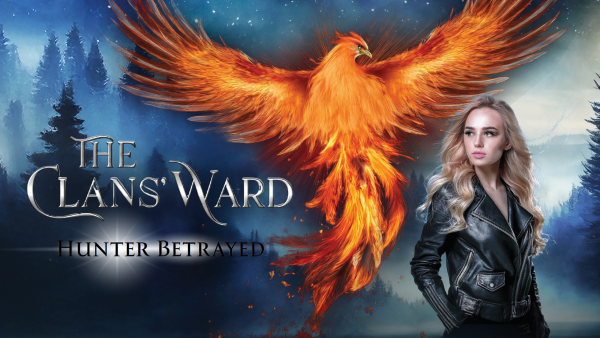
When I started writing The Clans’ Ward, I wanted a story that grew from the ground beneath my feet—one shaped by Quebec landscapes, local legends, and the uncomfortable feeling of living between worlds.
Hunter Betrayed is rooted in folklore, but it’s also driven by questions of identity, autonomy, and survival in a world where power rarely comes without strings attached.
The Wendigo, often reduced in pop culture to a cannibal monster, becomes something more complex here: a predator, yes, but also a political force, a guardian, and a symbol of fear projected by others. The Wendigo embodies what happens when society defines you by what you are rather than who you choose to be.
Other local legends also find new life in the story. La Corriveau, a historical figure turned ghost story, appears not as a passive myth but as a ruthless supernatural enforcer. Creatures like the Mishipeshu (the underwater panther) and the midnight washerwoman (Bean nighe) reinforce the idea that death, fate, and warning signs are woven into the land itself.
These aren’t myths frozen in time—they adapt, evolve, and clash with the modern world.
While Quebec folklore forms the backbone of the story, Hunter Betrayed also draws from legends across cultures. The Firebird (zhar-ptitsa) from Slavic folklore symbolizes transformation, dangerous gifts, and quests you didn’t ask for. The Thunderbird, drawn from Indigenous North American traditions, represents raw power tied to balance rather than domination. Fae lore, including Queen Mab, brings in a colder, more political vision of immortality—one where cruelty is often justified as order.
By weaving these traditions together, the world of The Clans’ Ward reflects how myths travel, collide, and reshape each other—much like cultures do.
One of my central inspirations was the idea that monsters are rarely the real problem.
In this second settlement, danger often comes from systems: political alliances, inherited power, and the belief that the “greater good” excuses any cost. The supernatural factions—the Clans, the Mage-King’s court, rogue mages—mirror very human struggles over autonomy, control, and fear of change.
Magic isn’t clean. Power leaves marks. And survival often demands compromise.
Ellie, the protagonist, is deliberately human in a world of monsters. Her struggle isn’t about becoming powerful—it’s about refusing to be reduced to a weakness, a pawn, or a symbol. Her desire for independence, even when it puts her at risk, reflects a core theme of the book: belonging should not require surrendering yourself. Protection can easily become control. Love can blur into surveillance. Community can suffocate as much as it shelters.
These themes are deeply tied to young adult fiction, but they also come from lived experience—negotiating identity within families, institutions, and expectations that claim to know what’s best for you.
Ultimately, Hunter Betrayed is a story about inheritance—of myths, of trauma, of power—and about deciding what to do with what you’re given.
Folklore, for me, isn’t about nostalgia. It’s about asking what still haunts us, what still protects us, and what we choose to pass on.
Join me on July 16,2026 for the release of The Clans’ Ward Book 2.

